Address
Factory-B-19, additional Midc, Yavatmal, Maharashtra, India
Work Hours
Monday to Saturday: 10 AM - 5 PM
Sunday: Closed
Hair loss is medically known as alopecia. It is a condition in which hair falls out from the scalp or other parts of the body faster than it can regrow. Everyone sheds hair daily, typically 50–100 strands, but hair loss becomes a problem when shedding is excessive, hair grows back thinner, or regrowth stops altogether.
Hair loss feels personal. When you see more hair on the pillow or the parting getting wider. Ayurveda recommended Bhringraj, Amla, and Shirodhara. Both sides claim to work.
Hair loss isn’t one problem. It’s 10 different problems that all look the same in the mirror. To know what works, you must match the treatment to the cause. Let’s break it down in plain language, with no hype.
Hair grows in a repeating cycle with three main phases:
Hair loss occurs when this cycle is disrupted. Either the growth phase shortens, too many hairs enter the shedding phase at once, or follicles gradually shrink and stop producing hair.
Understanding Why Hair Falls:
It is a genetic type of hair loss. It is pattern hair loss.
According to Ayurveda, Excess Pitta and Vata weaken Asthi Dhatu, the tissue that forms bone and hair. It is caused by genetic sensitivity to the hormone DHT (dihydrotestosterone).
Hair follicles are sensitive to DHT; a hormone made from testosterone. DHT shrinks follicles over years.
It is stress related type of hair loss. Stress, postpartum, illness, crash dieting pushing hair into shedding phase.
According to ayurveda, high vata from anxiety, poor sleep, or grief. Agni, your digestive fire, gets weak, so nutrients don’t reach hair. It is often triggered by chronic stress, illness, trauma, or weight loss. A shock to the body makes 30-50% of hairs jump into resting phase together. 2-3 months later, they all fall out at once.
It is caused by low ferritin, Vitamin D, B12, thyroid imbalance, PCOS.
According to ayurveda Rasa Dhatu deficiency. If the first tissue isn’t nourished, hair, which comes much later in the chain, starves. Hair is non-essential to the body. If you’re low on iron or protein, your body stops feeding follicles to save resources. Hormones play a major role in hair health.
Hair loss can be triggered by thyroid disorders, pregnancy and postpartum changes, menopause, polycystic ovary syndrome (PCOS). Hormonal imbalance often causes diffuse hair thinning rather than patterned baldness.
Key signs:
Thinning all over, brittle nails, fatigue, pale skin, irregular periods.
It is seborrheic dermatitis, psoriasis, fungal infection, and alopecia areata. It is inflammatory conditions that permanently damage follicles. Certain medications can also trigger hair loss, including chemotherapy, blood pressure medications, antidepressants, hormonal drugs.
According to ayurveda pitta and kapha imbalance causing dandruff with itching and heat. Inflammation damages follicles. Immune system attacks them in alopecia areata. Repeated physical stress on hair may also cause hair loss, especially tight hairstyles (traction alopecia), excessive heat styling, chemical treatments, rough handling or over-brushing. While this usually affects the hair shaft more than the follicle, prolonged damage can weaken hair roots.
Key signs:
Itching, flakes, red scalp, patchy bald spots.
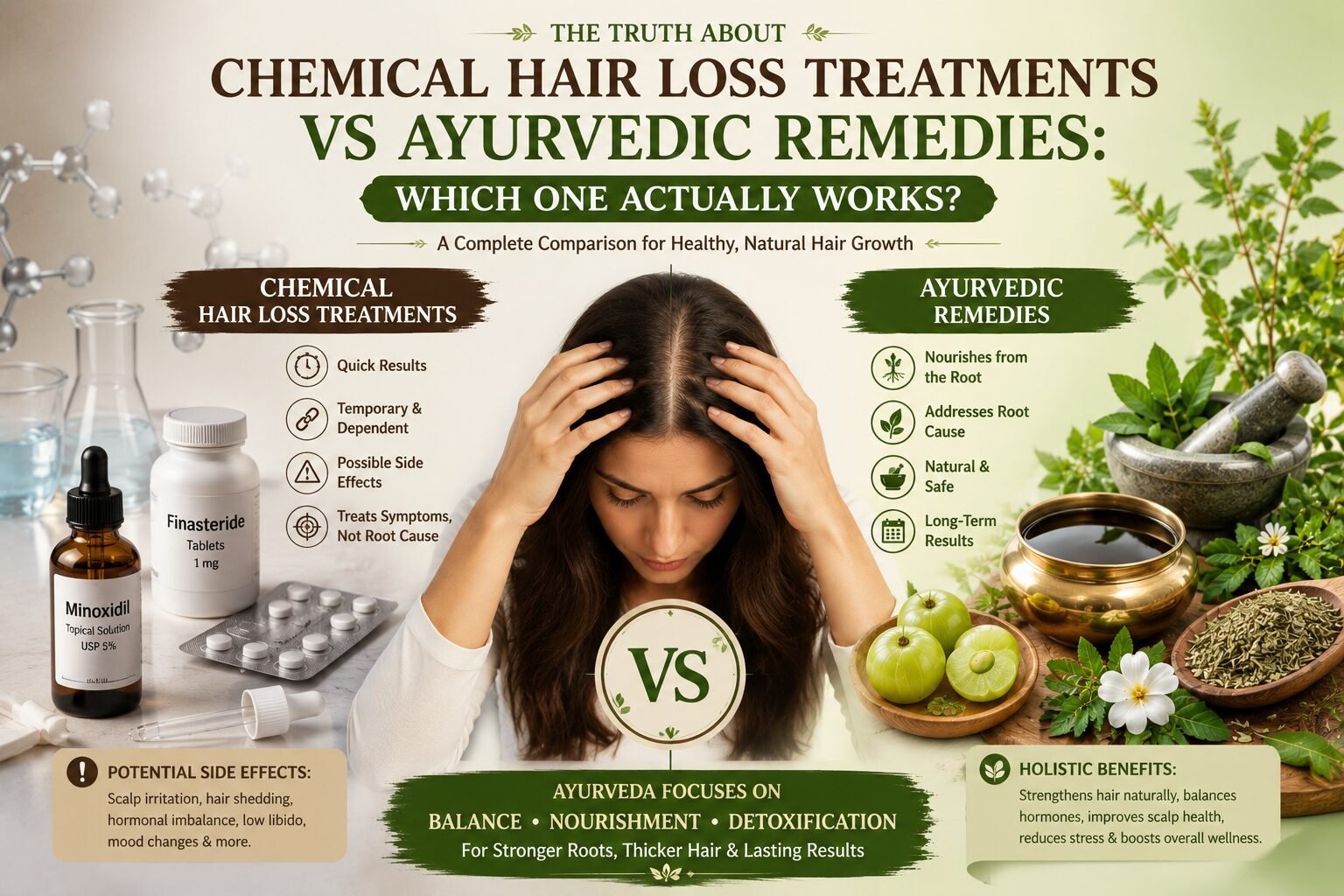
While chemical treatments may offer temporary benefits, their side effects are a major concern. Minoxidil commonly causes scalp irritation, dryness, itching, redness, and excessive initial hair shedding. In some individuals, it can also lead to unwanted hair growth on the face or body. Finasteride is associated with more serious systemic side effects, including reduced libido, erectile dysfunction, hormonal imbalance, depression, anxiety, mood swings, and, in rare cases, long-term sexual dysfunction.
Medicated shampoos can strip the scalp of natural oils, leading to dryness and increased sensitivity. PRP and laser therapies require repeated clinical sessions and may not deliver consistent results. Hair transplant surgeries, though permanent, are invasive, expensive, and carry risks such as infection, scarring, unnatural hair appearance, and uneven density.
Another major limitation of chemical treatments is dependency. Most medications only work if they are used continuously. Once discontinued, hair loss often resumes rapidly, sometimes more aggressively than before. Chemical treatments tend to mask symptoms rather than correct the underlying causes of hair fall.
It is the Traditional System. Ayurveda does not treat hair as separate from the body. Hair fall and premature greying are signs of deeper hormonal imbalance. Ayurvedic treatment is always pacifying, and cleansing. Ayurveda is one of the oldest holistic medical systems in the world. It views hair health as a reflection of overall bodily balance, including digestion, stress, sleep, and nutrition.
Ayurvedic Hair Loss Remedies:
Ayurvedic remedies work to reduce inflammation, improve scalp circulation. It helps to strengthen hair roots, calm the nervous system, and correct nutritional and digestive imbalances. This makes Ayurveda especially effective for stress-related hair loss and hair fall due to poor health.
Ayurvedic herbs help in hair loss by improving the body’s internal balance, strengthening hair roots, reducing stress, and nourishing the scalp naturally. Unlike quick-fix treatments, Ayurveda focuses on long-term hair health by addressing the root causes of hair fall such as digestion issues, stress, hormonal imbalance, and nutritional deficiencies.
This holistic approach makes Ayurvedic herbs especially useful for reducing hair fall, improving hair quality, and preventing further damage. In Ayurveda, hair is considered a byproduct of bone tissue and is strongly influenced by the balance of pitta dosha.
Amla is one of the most important Ayurvedic herbs for hair health. Amla is rich in natural antioxidants and Vitamin C. Which Strengthens hair follicles. Reduces hair fall and breakage. Helps prevent premature greying. Improves scalp circulation.
Ayurvedic action:
It pacifies pitta dosha, making it ideal for heat-related hair loss. It supports bone tissue, which is associated with hair formation. It balances all three doshas.
How to use:
Take 1 tablespoon amla powder with warm water each morning. Do amla oil massage on scalp twice a week. Amla, bhringraj, and brahmi oil is classic combination for scalp massage.
Best for:
Diffuse thinning, weak hair, premature greying. Anyone with low immunity or poor digestion.
It is known in Ayurveda as the King of Hair Herbs. Bhringraj stimulates hair growth. Reduces excessive hair fall. Improves blood flow to hair follicles. Strengthens weak hair roots.
Ayurvedic action:
It helps to cools Pitta and nourishes bone tissue. It helps to control pitta related hair loss. It reduces heat in scalp. It supports healthy scalp environment.
How to use:
Take warm Bhringraj oil and massage on scalp two times a week. Leave one hour or overnight. Use Bhringraj powder with Amla as a hair mask.
Best for:
Pitta-type hair loss, thinning from anger, heat, spicy food, late nights. Early greying.
Brahmi is especially useful for stress-related hair loss. Brahmi calms the nervous system. Reduces mental stress and anxiety. Improves scalp circulation. Strengthens hair roots.
Ayurvedic action:
It balances vata and pitta dosha. It improves mental clarity and sleep quality. It calms mind.
It reduces hair loss from stress, anxiety, and overthinking is a Vata disorder. Brahmi reduces cortisol and increases focus.
How to use:
Use Brahmi oil for head massage. Take 300mg Brahmi capsule, if stress is high before going to bed at night.
Best for:
Telogen effluvium, postpartum shedding, hair loss after exams or grief.
Ashwagandha is a powerful adaptogen, which reduces cortisol (stress hormone) and helps balance hormones. Improves overall strength and vitality. Prevents stress-induced hair fall.
Ayurvedic Action:
It balances Vata dosha. It controls stress hormones. It helps balance hormones. It reduces hair loss caused by chronic stress. It is very effective for lifestyle-related hair loss.
How to use:
Take half to one tablespoon with warm milk or water before going to bed at night daily.
Best For:
Hair loss due to long-term stress, lifestyle-related hair fall and hormonal imbalance-related hair loss.
Neem focuses mainly on scalp health. Anti-microbial. Neem has antibacterial and antifungal properties, which reduce dandruff and scalp infections. Keeps hair follicles clean and open.
Ayurvedic Action:
It pacifies Pitta and Kapha. It is detoxifying for the scalp. Cleanse Kapha and Pitta from scalp. Remove excess oil and fungal growth without harsh sulfates.
Best For:
Hair loss with dandruff or itching, oily or unhealthy scalp conditions. Dandruff-related hair fall, itchy scalp
How to use:
Use neem powder two time per week before mild herbal shampoo.
Shikakai means fruit for hair in Ayurveda. It acts as a strengthener and conditioner. Shikekai strengthens hair roots and hair shaft. Reduces hair breakage and split ends. Maintains natural moisture of scalp. Improves softness, shining, and manageability.
Reetha is mainly a natural cleanser. Reetha contains saponins, which create mild natural foam. Removes dirt, sweat, excess oil, and buildup. Helps control dandruff and scalp itching. Keeps hair follicles clean and open.
Ayurvedic action:
Reetha cleans the scalp deeply. Shikakai protects and strengthens hair. Natural oils are preserved. Scalp remains balanced, not too dry or oily.
Best For:
Hair loss due to harsh shampoos, dry or sensitive scalp, dandruff-related hair fall, weak, brittle hair.
How to use:
Take 4–5 Reetha (soapnuts) and two tablespoon Shikakai pieces or powder. Soak overnight. Boil in the next morning for 10–15 minutes. Let cool and strain. Use the liquid to wash hair. This works like a natural shampoo. Use it two to three times per week.
Panchakarma is a core detoxification and rejuvenation therapy in Ayurveda. Unlike external hair treatments, Panchakarma works by cleansing the body internally, correcting hormonal and digestive imbalances, reducing stress, and restoring the body’s natural balance are essential for healthy hair growth.
If digestion is weak, no herb will reach hair. Diet plays very important part in reducing hair related problems.
Panchakarma treatments:
Nasya:
Shirodhara:
Virechana:
Diet:
Add coconut, ghee, and sweet fruits into daily diet.
Avoid spicy food and alcohol.
Always eat warm, oily, protein-rich if hair loss from stress.
Add dates, black sesame, beetroot, cooked green vegetables.
Add moong dal, paneer, eggs into diet.
Best for:
Chronic, diffuse loss with digestive issues, insomnia, anxiety.
The pattern with Ayurveda is slow, holistic, and individualized. It works best for hair loss caused by stress, nutrition, digestion, or inflammation.
Benefits of Ayurveda for Hair loss:
One of the greatest benefits of Ayurveda is its holistic approach. Instead of focusing only on hair, it improves digestion, metabolism, hormonal balance, and mental well-being. Ayurvedic treatments nourish hair from within, making the roots stronger and the strands thicker and healthier.
Ayurveda offers long-term results without creating dependency. When used correctly, its remedies have minimal side effects and are generally safe for prolonged use. Ayurvedic oils and herbs improve scalp health, enhance blood circulation, and support the natural hair growth cycle.
Additionally, Ayurveda emphasizes prevention. By restoring internal balance, it not only reduces hair fall but also prevents premature greying, dandruff, dryness, and scalp inflammation.
The Final Truth: Ayurveda is better than Chemical treatments for Hair Loss
Ayurveda is superior to chemical treatments because it treats the individual rather than as a set of symptoms. Chemical treatments often focus on blocking hormones or artificially stimulating follicles, which can disturb the body’s natural balance. Ayurveda works in harmony with the body’s biological rhythms and natural healing mechanisms.
Chemical treatments may deliver quick cosmetic results but often at the cost of long-term health and dependency.
Ayurveda, although slower, produces sustainable results by strengthening existing hair, preventing further loss, and improving overall well-being.
Chemical treatments work faster and stronger for hormone-driven, genetic hair loss. But they demand commitment and don’t fix lifestyle.
Ayurvedic remedies work brilliantly for stress, nutritional, and inflammatory hair loss. They heal the system, not just the scalp.
Ayurveda supports the body that grows the hair. Ayurvedic herbs help in hair loss by restoring internal balance, calming stress, improving digestion, and nourishing hair naturally.
Ayurveda does not force hair growth; it creates the conditions in which healthy hair can grow. Ayurvedic herbs can play a powerful role in preventing hair loss and improving overall hair health.
Hence Ayurveda is better than Chemical treatments for Hair Loss.