Address
Factory-B-19, additional Midc, Yavatmal, Maharashtra, India
Work Hours
Monday to Saturday: 10 AM - 5 PM
Sunday: Closed
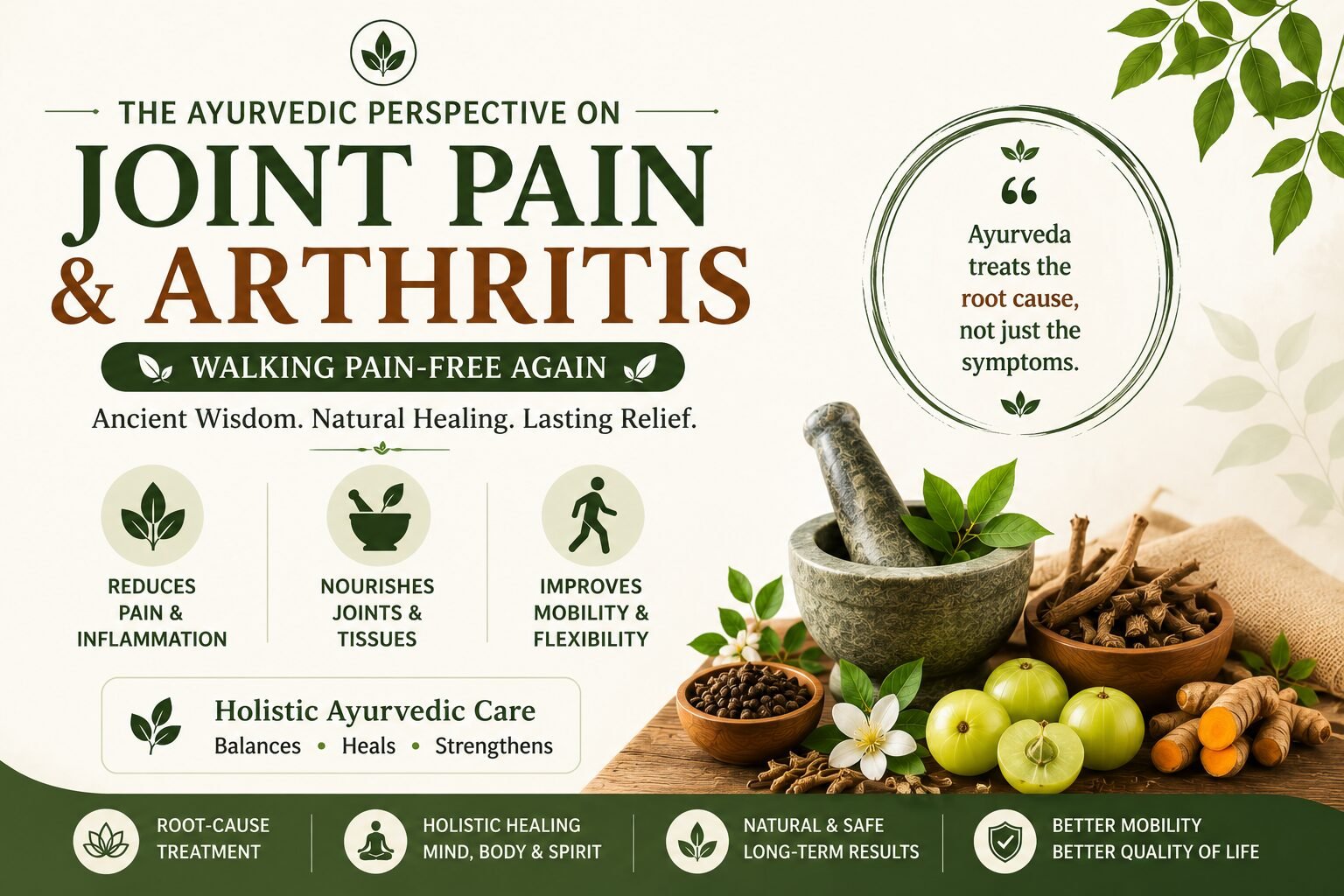
Joint pain and arthritis are among the most widespread chronic health complaints globally, affecting millions of individuals across different age groups, occupations, and lifestyles. Once considered conditions of old age, joint disorders are now increasingly observed in younger populations due to sedentary habits, poor posture, nutritional deficiencies, stress, obesity, and mechanical overuse of joints. Persistent joint pain not only reduces physical mobility but also significantly impacts mental health, emotional well-being, productivity, and overall quality of life.
Conventional medical systems primarily focus on symptom management through analgesics, anti-inflammatory drugs, steroids, or surgical interventions. While these treatments can offer temporary relief, they often fail to address the underlying causes of joint deterioration and may lead to long-term side effects. Ayurveda, the ancient and holistic healing system of India, offers a deeply insightful approach to joint pain and arthritis—one that emphasizes root-cause correction, balance restoration, and sustainable healing rather than temporary suppression of symptoms.
This comprehensive discussion explores the nature of joint pain and arthritis, their types and causes, and presents an in-depth Ayurvedic understanding of their pathogenesis, diagnosis, prevention, and management. By aligning the body’s internal balance with nature’s rhythms, Ayurveda provides a dependable pathway to restore mobility, reduce pain, and reclaim the freedom to walk pain-free again.
Understanding Joint Pain
Joints are anatomical structures that connect two or more bones, facilitating movement and providing support to the skeletal system. They are composed of cartilage, ligaments, tendons, synovial fluid, and surrounding muscles, all working together to allow smooth and pain-free motion. Joint pain arises when one or more of these components become inflamed, degenerated, injured, or imbalanced.
Joint pain can range from mild discomfort to severe, disabling pain and may be acute or chronic in nature. It commonly affects the knees, hips, shoulders, wrists, fingers, ankles, elbows, and spinal joints. Pain may worsen with movement, weather changes, prolonged inactivity, or physical exertion. In many individuals, joint pain is accompanied by stiffness, swelling, reduced range of motion, and a sensation of heaviness or instability.
From an Ayurvedic perspective, joint pain is not viewed as an isolated structural problem but as a manifestation of deeper systemic imbalances involving digestion, metabolism, tissue nourishment, and nervous regulation.
Understanding Arthritis
Arthritis is a collective term used to describe a group of disorders characterized by inflammation of the joints. It is not a single disease, but rather a category encompassing more than 100 distinct conditions that affect joint health. The hallmark features of arthritis include pain, stiffness, swelling, redness, warmth, and progressive loss of joint function.
Arthritis may develop gradually over years, as seen in degenerative forms, or appear suddenly, as in inflammatory or autoimmune variants. In advanced stages, arthritis can lead to joint deformities, disability, and dependency.
Modern medicine classifies arthritis primarily based on pathology and immune involvement. Ayurveda, in contrast, classifies arthritic conditions based on dosha imbalance, toxin accumulation, tissue degeneration, and metabolic dysfunction.
Types of Arthritis:
Osteoarthritis
Osteoarthritis is the most prevalent form of arthritis and is primarily a degenerative joint disease. It results from gradual wear and tear of cartilage due to aging, mechanical stress, obesity, repetitive movements, or past injuries. As cartilage thins, bones begin to rub against each other, causing pain, stiffness, and reduced mobility.
Osteoarthritis commonly affects weight-bearing joints such as the knees, hips, lower spine, and hands. Symptoms usually worsen with activity and improve with rest.
Rheumatoid Arthritis
Rheumatoid arthritis is a chronic autoimmune disorder in which the immune system mistakenly attacks the synovial lining of the joints. This leads to persistent inflammation, pain, swelling, and progressive joint damage. Unlike osteoarthritis, rheumatoid arthritis often affects multiple joints symmetrically and may involve systemic symptoms such as fatigue, fever, and weight loss.
Gout
Gout is a metabolic form of arthritis caused by elevated uric acid levels in the blood. Excess uric acid crystallizes and deposits in joints, most commonly the big toe, leading to sudden, intense pain, swelling, and redness. Dietary habits, alcohol consumption, and metabolic disorders play significant roles in gout.
Other Forms of Arthritis
Psoriatic arthritis, ankylosing spondylitis, juvenile idiopathic arthritis, and reactive arthritis each have distinct features but share the common thread of inflammation and progressive joint impairment.
Ayurvedic Perspective on Joint Pain and Arthritis
Ayurveda explains all physiological and pathological processes through the balance or imbalance of three fundamental energies known as doshas—Vata, Pitta, and Kapha.
Among these, Vata dosha is the most critical factor in joint health. Vata governs movement, nerve impulses, circulation, dryness, and flexibility. Joints are natural seats of Vata, and when Vata becomes aggravated, it manifests as pain, stiffness, cracking sounds, instability, and degeneration.
Joint disorders in Ayurveda primarily arise due to aggravation of Vata dosha, a weak digestive fire, accumulation of metabolic toxins, and poor nourishment of tissues.
Ayurveda classifies arthritis into specific conditions:
Sandhivata
Corresponds to osteoarthritis and results from aggravated Vata causing dryness, degeneration, and pain in joints.
Sandhivata occurs due to a predominance of Vata dosha, which governs movement, dryness, and degeneration. As age increases, Vata naturally rises in the body. If this rise is aggravated by improper lifestyle or diet, it leads to joint degeneration.
In Sandhivata, cartilage degeneration is seen because of tissue depletion caused by uncontrolled Vata. Ayurveda aims not just to control pain but to nourish joints, restore lubrication, and slow further degeneration.
Amavata
Comparable to rheumatoid arthritis, Amavata occurs when undigested metabolic toxins combine with aggravated Vata and lodge in joints, leading to inflammation, swelling, and systemic symptoms.
Amavata is considered one of the most serious and complex forms of arthritis described in Ayurveda. It closely parallels rheumatoid arthritis, an autoimmune and inflammatory condition.
Ama refers to toxins formed due to weak digestion. When digestion is impaired, food is not properly metabolized, leading to toxic residue. This Ama circulates in the body and settles in joints when combined with aggravated Vata.
Ayurveda sees Amavata as a systemic disorder, not a localized joint disease. Treatment focuses on eliminating Ama, strengthening digestion, reducing inflammation, gradually balancing aggravated Vata.
Vatarakta
Associated with gout and inflammatory arthritis, caused by vitiation of Vata and blood tissue. Vatarakta is another important classification of arthritis in Ayurveda and closely resembles gout. Excess intake of rich, salty, sour, spicy foods and alcohol vitiates the blood. When aggravated blood obstructs Vata’s path in joints, it leads to sudden and intense pain.
Ayurveda considers Vatarakta both a joint disorder and a blood disorder. Treatment focuses on purifying blood, pacifying Vata, correcting dietary excesses, preventing recurrence through lifestyle change.
Causes of Joint Pain According to Ayurveda:
Ayurvedic texts describe joint disorders as multifactorial conditions influenced by diet, lifestyle, behavior, mental health, and aging. Key causes include:
Symptoms of Ayurvedic Joint Disorders:
Common symptoms observed in Vata-dominant joint disorders include:
In Amavata, symptoms may also include heaviness, fever, loss of appetite, and systemic inflammation.
Ayurvedic Diagnosis
Ayurvedic diagnosis is holistic and individualized. It does not rely solely on imaging or laboratory tests but involves:
This comprehensive diagnostic approach allows for personalized treatment that addresses the root cause rather than just the affected joint.
Principles of Ayurvedic Treatment:
The Ayurvedic management of joint pain and arthritis follows several core principles pacification of aggravated doshas, strengthening digestive fire, elimination of toxins, nourishment of joints, bones, and muscles, restoration of mobility and strength, prevention of recurrence.
Treatment is always customized according to the individual’s constitution, disease type, severity, age, and strength.
Role of Panchakarma Therapy
Panchakarma is Ayurveda’s specialized detoxification and rejuvenation system. It deeply cleanses the body and restores dosha balance.
Key Panchakarma therapies for arthritis include:
Panchakarma not only reduces pain but also slows disease progression and enhances tissue regeneration.
Ayurvedic Herbal Management
Ayurveda employs numerous herbs renowned for their anti-inflammatory, analgesic, and rejuvenating properties:
Herbal formulations are prescribed under expert guidance to ensure safety and effectiveness.
Dietary Guidelines for Joint Health
Diet is central to Ayurvedic healing. For joint disorders, food that pacifies Vata and enhances digestion is recommended.
Recommended Foods
Proper hydration and mindful eating are equally important.
Lifestyle and Daily Routine
Ayurveda emphasizes structured daily routines to stabilize Vata and maintain joint health.
In Ayurveda, a disciplined daily routine is considered essential for stabilizing Vata dosha, which is the primary factor responsible for joint pain and degeneration.
Regular sleep:
Maintaining regular sleep and wake times helps regulate the body’s internal clock and keeps Vata calm, as irregular schedules are known to aggravate stiffness and pain.
Physical activity:
Incorporating gentle physical activity such as slow walking, stretching, or light yoga promotes circulation and keeps joints lubricated without putting excessive strain on them.
Avoidance of overexertion:
Ayurveda strongly advises the avoidance of overexertion, since excessive or intensive exercise can worsen joint wear and increase inflammation.
Keeping the joints warm:
Especially during cold or damp weather, is another important practice because warmth counteracts Vata’s cold and dry qualities, reducing stiffness and discomfort.
Stress management:
Stress management through meditation and relaxation techniques plays a vital role, as mental stress directly aggravates Vata and heightens pain perception.
Together, these simple yet structured lifestyle practices create a supportive environment for joint healing, mobility, and longterm pain prevention.
Yoga and Physical Movement
Yoga is an integral part of Ayurvedic joint care. Gentle asanas improve flexibility, strengthen muscles, and lubricate joints.
Beneficial practices include:
Excessive or forceful exercise is discouraged.
Mind-Body Connection
Ayurveda recognizes the profound impact of mental health on physical conditions. Fear, anxiety, and stress aggravate Vata, intensifying pain. Mindfulness, pranayama, and meditation help calm the nervous system, reduce pain perception, and promote healing.
Prevention and Long-Term Joint Care
Preventive strategies include strong digestion maintenance, seasonal detoxification, healthy weight management, balanced nutrition, early intervention, prevention is always superior to cure in Ayurveda.
Walking PainFree Again: A Holistic Reality
Walking pain-free is not simply a symptom-free state but a reflection of internal harmony. Ayurveda does not promise instant cures but offers sustainable, long-term transformation. With disciplined lifestyle changes and appropriate therapies, it is possible to restore mobility, independence, and confidence.
Swashri Ghorpade
Certified Maternal & Child Nutritionist
12th May 2026, Tuesday
Conclusion
Joint pain and arthritis need not dictate the quality of one’s life. Ayurveda offers a profound, scientific, and compassionate system of healing that addresses the root of the problem rather than masking symptoms. By harmonizing diet, lifestyle, mental health, detoxification, and herbal support, individuals can experience meaningful recovery and regain the simple yet priceless joy of movement.
The Ayurvedic path to walking pain-free again is a journey of awareness, discipline, and self-care—one that leads not only to healthier joints but to a more balanced and fulfilling life.
Joint pain and arthritis do not have to define your life. With Ayurveda’s holistic wisdom and personalized care, lifestyle, ayurvedic herbs and mental wellbeing it is possible to regain mobility, confidence, and the simple joy of walking without pain—naturally and sustainably.
Rumatol Capsule is the flagship internal medicine of Ujwala Ayurvedashram for joint pain and arthritis. Rumatol Oil is an Ayurvedic massage oil designed for immediate relief from joint and muscle pain. Ujwala Ayurvedashram also promotes the combined use of Rumatol Capsule and Rumatol Oil for arthritis management.
Consult with your doctor before starting anything mentioned in the information.
Disclaimer: This content is for educational purposes. Always consult a qualified Ayurvedic physician before starting any treatment, especially if you have medical conditions, are pregnant, or take prescription medication.